Digital wax-ups have revolutionized the approach to full mouth rehabilitation, providing dentists with precise tools for treatment planning and execution. By integrating advanced technology into restorative dentistry and smile design, digital wax-ups enhance outcomes for both clinicians and patients.
What Are Digital Wax-Ups?
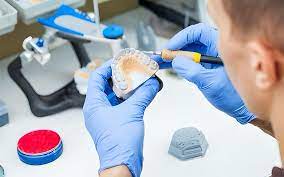
Digital wax-ups are 3D virtual models that simulate the desired outcome of dental treatments. Unlike traditional methods using physical wax, these are created through advanced digital imaging and design software. This allows for greater accuracy and predictability in planning restorative dentistry procedures.
Benefits of Digital Wax-Ups
1. Enhanced Treatment Planning
Digital wax-ups enable dentists to:
- Visualize and refine the final restoration virtually.
- Address functional and aesthetic concerns effectively.
- Communicate treatment plans clearly with patients and dental teams.
2. Improved Accuracy
Using digital tools ensures a precise representation of:
- Tooth alignment and occlusion.
- Material thickness for crowns, bridges, and veneers.
- Proportionality in smile design.
3. Streamlined Workflow
- Faster turnaround times by eliminating manual wax modeling.
- Seamless integration with CAD/CAM systems for prosthetic fabrication.
The Role of Digital Wax-Ups in Full Mouth Rehabilitation
Full mouth rehabilitation often involves addressing complex issues, such as worn dentition, misalignment, or missing teeth. Digital wax-ups are instrumental in achieving success through the following:
1. Comprehensive Diagnosis
- Analyzing the patient’s current dental structure using 3D imaging.
- Identifying occlusal interferences and jaw dynamics to prevent future complications.
2. Custom Smile Design
Digital wax-ups help design a smile tailored to the patient’s facial features, ensuring both functionality and aesthetics.
3. Mock-Up Trials
- Temporary restorations based on the digital wax-up can be fabricated for patients to “test drive” their new smile.
- Adjustments can be made digitally before final restorations are created.
4. Precision Restorations
- Data from the digital wax-up guides the milling or 3D printing of restorations, ensuring accuracy in fit and function.
Steps in Creating Digital Wax-Ups
1. Data Acquisition
- Intraoral scans or CBCT images capture the patient’s dental structure.
2. Digital Modeling
- Software creates a virtual model of the teeth and surrounding structures.
3. Designing the Restoration
- Adjustments are made to ensure optimal occlusion, aesthetics, and functionality.
4. Output and Fabrication
- The finalized design is sent to a CAD/CAM system for precise prosthetic fabrication.
Advantages for Patients
- Visual Representation: Patients can see a virtual preview of their final smile.
- Confidence Building: Helps alleviate anxiety by showcasing expected results.
- Personalized Care: Tailored designs based on individual needs and preferences.
Future of Digital Wax-Ups
As technology advances, digital wax-ups will continue to integrate with AI and machine learning, making full mouth rehabilitation even more efficient and predictable. Innovations in 3D printing and material science will further enhance the capabilities of this technology.
Digital wax-ups are transforming full mouth rehabilitation, offering unmatched precision and efficiency in restorative dentistry and smile design. By combining cutting-edge technology with patient-centric care, dentists can achieve superior results that restore both function and confidence.