
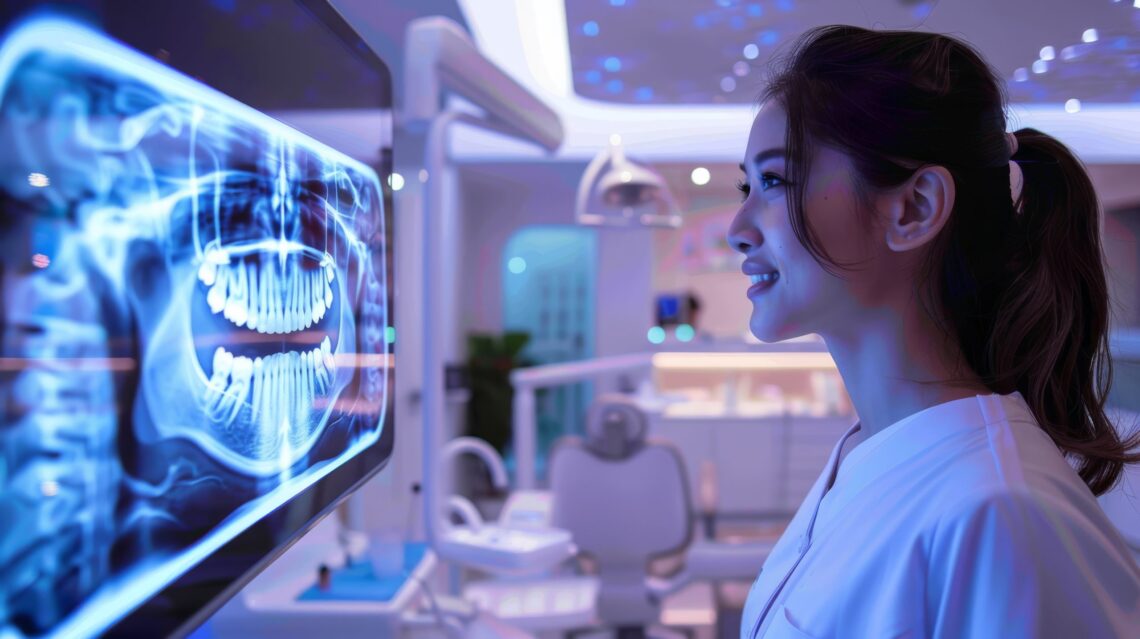
Artificial Intelligence (AI) is increasingly making its mark in orthodontics, revolutionizing the way dental professionals approach treatment planning. With its ability to analyze vast amounts of data, AI is enhancing precision in orthodontic planning, ensuring that treatment plans are not only faster but also more accurate and tailored to each patient’s unique needs. From braces alignment to creating digital treatment plans, AI is transforming the orthodontic landscape.
The Role of AI in Orthodontics
AI in orthodontics involves the use of algorithms, machine learning, and data analysis to optimize various aspects of dental care, particularly in orthodontic treatment planning. These technologies can predict treatment outcomes, design personalized braces alignment, and even anticipate complications before they occur. The use of AI helps orthodontists make informed decisions and provides more effective, predictable, and customized care.
How AI Enhances Precision in Orthodontic Treatment
1. AI-Driven Digital Treatment Plans
One of the most significant advancements in orthodontics is the development of digital treatment plans powered by AI. Traditional methods of planning braces alignment involve manual adjustments and trial-and-error approaches. AI, however, uses 3D imaging and machine learning to analyze a patient’s dental structure in great detail, allowing for a more accurate and personalized treatment plan.
AI systems can predict tooth movements with remarkable precision, taking into account factors like tooth size, jaw alignment, and bone density. By processing these data points, AI can offer the orthodontist an optimized treatment plan, reducing the need for revisions and ensuring the desired outcome is achieved.
2. Predicting Treatment Outcomes
AI models can predict how a patient’s teeth will move throughout treatment. By analyzing historical data and dental models, AI can forecast how long treatment will take, how teeth will respond to specific forces, and the best way to align them for both aesthetic and functional purposes. This predictive capability ensures that braces alignment occurs more efficiently, with fewer unexpected delays.
3. Personalized Treatment Strategies
AI allows orthodontists to create highly personalized treatment strategies based on each patient’s unique dental needs. Using AI, orthodontists can integrate data from digital impressions, 3D scans, and patient history to design custom appliances, like clear aligners, that fit the individual needs of the patient’s teeth. This tailored approach not only improves the precision of treatment but also reduces discomfort and enhances overall patient satisfaction.
4. Automation of Routine Tasks
AI can automate several routine tasks in orthodontics, such as measuring tooth alignment and generating digital treatment plans. This automation reduces the likelihood of human error and allows orthodontists to focus more on complex tasks and patient care. AI systems can also handle administrative aspects, like scheduling and tracking treatment progress, helping practices run more efficiently.
The Benefits of AI in Orthodontics
1. Increased Treatment Efficiency
AI algorithms can quickly process a large amount of data, leading to faster diagnosis and more efficient treatment planning. This streamlines the orthodontic workflow, allowing patients to begin treatment sooner and experience fewer adjustments during the process.
2. Improved Accuracy and Precision
By eliminating the guesswork from treatment planning, AI enhances the accuracy of braces alignment. It can account for subtle variations in tooth structure and provide recommendations that ensure each tooth is positioned optimally. The result is a better-fitting appliance, more precise tooth movement, and more predictable outcomes.
3. Better Patient Outcomes
With AI-powered systems, orthodontists can predict the exact course of treatment and customize the experience for each patient. This leads to better overall outcomes, including more accurate tooth alignment, reduced treatment time, and fewer complications.
4. Reduced Treatment Time
AI can accelerate orthodontic treatment by optimizing the movement of teeth. With precise adjustments and predictive modeling, the need for excessive visits and prolonged treatment periods is reduced, leading to a faster and more comfortable experience for the patient.
AI Applications in Specific Orthodontic Procedures
1. Clear Aligners
AI is revolutionizing the development of clear aligners, which are becoming an increasingly popular alternative to traditional braces. AI algorithms design aligners that match the patient’s tooth structure and movement needs. By continuously analyzing the progress, AI can also adjust the treatment plan in real-time, ensuring the best results.
2. Bracket and Wire Adjustments
AI can assist orthodontists in adjusting bracket placement and wire tension. The technology can evaluate the force required for the ideal movement of each tooth, and recommend the most appropriate wire type and bracket placement for efficient treatment.
3. 3D Printing and Customized Appliances
AI aids in the creation of customized orthodontic appliances by using 3D printing technology. AI analyzes the patient’s dental scans and designs appliances, like retainers or braces, that are tailored to fit precisely. This technology not only enhances comfort but also improves the overall treatment experience by creating well-fitting, effective devices.
Challenges and Future of AI in Orthodontics
While AI offers a multitude of benefits, there are still challenges to overcome. For example, the integration of AI systems into existing practices may require significant investment in both training and technology. Moreover, while AI can assist with braces alignment and treatment planning, human expertise remains essential in evaluating and making final decisions about treatment options. AI tools should be seen as a supportive tool rather than a complete replacement for the clinician’s judgment.
The future of AI in orthodontics looks promising. With continued advancements in machine learning and computer vision, AI will likely play an even greater role in customizing treatments, improving accuracy, and enhancing patient care. As more data becomes available, AI’s predictive capabilities will further refine orthodontic treatment, leading to even more efficient and successful outcomes.
AI is rapidly transforming orthodontics, bringing a new level of precision to braces alignment and digital treatment planning. With its ability to predict treatment outcomes, create personalized plans, and improve efficiency, AI is enhancing both the quality and speed of orthodontic care. As technology continues to evolve, the role of AI in orthodontics will only expand, providing better, faster, and more accurate treatment options for patients.

